

The screw thread form is a critical factor that significantly influences the performance of feed screws. As a leading feed screws supplier, we have witnessed firsthand how different thread forms can impact the functionality, efficiency, and overall performance of these essential components in various industrial applications. In this blog, we will delve into the details of how screw thread form affects feed screw performance.
Understanding Screw Thread Forms
Screw thread forms come in a variety of shapes and sizes, each designed to serve specific purposes. The most common thread forms include triangular, square, and trapezoidal threads. Triangular threads, such as the V - thread, are widely used due to their simplicity and ease of manufacturing. They are suitable for applications where self - locking is required, as the steep angle of the thread helps prevent the screw from loosening under vibration.
Square threads, on the other hand, are known for their high efficiency in transmitting power. They have a straight - sided profile, which allows for a large contact area between the screw and the nut. This results in less friction and better load - carrying capacity, making them ideal for applications that require high precision and heavy loads, such as in machine tools.
Trapezoidal threads are a compromise between triangular and square threads. They have a trapezoidal cross - section, which combines the self - locking properties of triangular threads with the high efficiency of square threads. Trapezoidal threads are commonly used in feed screws for injection molding, extrusion, and other industrial processes.
Impact on Feed Rate
The thread form of a feed screw has a direct impact on the feed rate. A screw with a finer pitch (the distance between adjacent threads) will have a slower feed rate compared to a screw with a coarser pitch. For example, in an Injection Molding Feed Screws application, a fine - pitched screw may be used when precise control of the material flow is required. This is because a finer pitch allows for more accurate movement of the screw, resulting in a more consistent feed rate.
Conversely, a coarser - pitched screw can provide a higher feed rate. In extrusion processes, where large volumes of material need to be moved quickly, a coarser - pitched Extrusion Feed Screws may be preferred. However, a coarser pitch may also lead to less precise control over the feed rate, so the choice of pitch depends on the specific requirements of the application.
Load - Carrying Capacity
The thread form also affects the load - carrying capacity of the feed screw. Square threads, as mentioned earlier, have a large contact area between the screw and the nut, which enables them to carry heavy loads. This makes them suitable for applications where high axial forces are involved, such as in the lifting mechanisms of heavy machinery.
Triangular threads, while having self - locking properties, generally have a lower load - carrying capacity compared to square or trapezoidal threads. The pointed shape of the triangular thread reduces the contact area, which can lead to higher stress concentrations and potential failure under heavy loads.

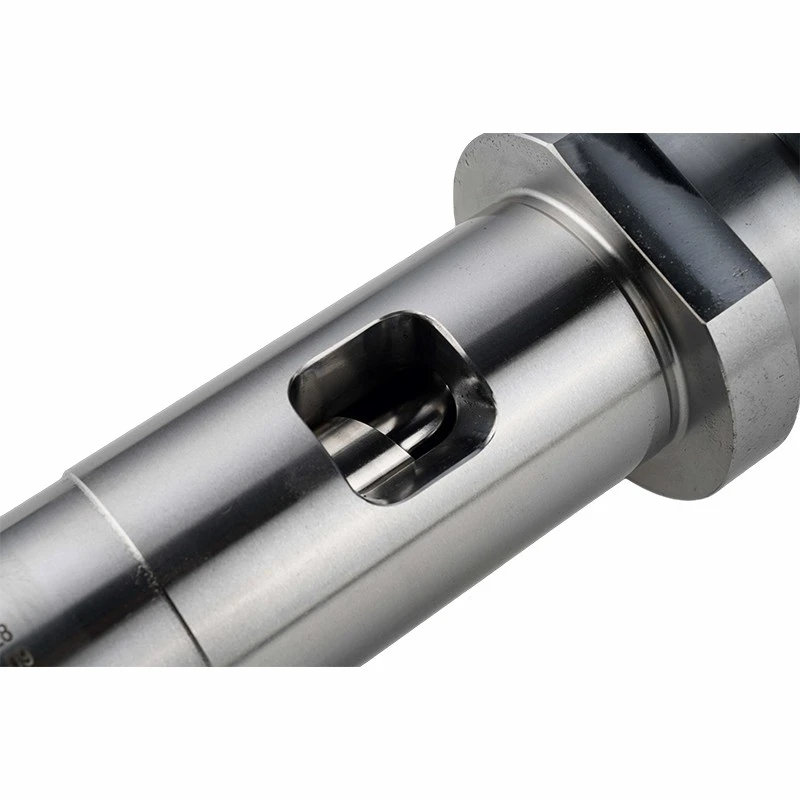
Trapezoidal threads offer a good balance between load - carrying capacity and self - locking ability. They can handle moderate to heavy loads while still providing some degree of self - locking, making them a popular choice for many industrial feed screw applications.
Friction and Efficiency
Friction is another important factor affected by the screw thread form. Square threads have the lowest friction among the common thread forms because of their straight - sided profile and large contact area. This results in higher efficiency in power transmission, as less energy is wasted in overcoming friction.
Triangular threads, due to their pointed shape, have higher friction compared to square threads. The high friction can lead to increased wear and tear on the screw and nut, as well as reduced efficiency. Trapezoidal threads have a friction level that is between that of triangular and square threads, offering a reasonable compromise in terms of efficiency and self - locking.
Wear Resistance
The wear resistance of a feed screw is closely related to its thread form. Square threads, with their large contact area, distribute the load more evenly, which can reduce wear. Additionally, the straight - sided profile of square threads makes them less prone to damage from abrasion.
Triangular threads, however, are more susceptible to wear due to their pointed shape. The sharp edges of the triangular thread can easily be worn down, especially under high - load or high - speed conditions. Trapezoidal threads offer better wear resistance than triangular threads, but not as good as square threads.
Application - Specific Considerations
Different industrial applications have specific requirements for feed screw performance, and the choice of thread form should be based on these requirements.
In injection molding, Injection Molding Feed Screws need to provide precise control over the material flow and pressure. A trapezoidal or square thread form may be preferred in this case, as they offer good load - carrying capacity and precise movement.
For extrusion processes, Extrusion Feed Screws need to move large volumes of material quickly. A coarser - pitched trapezoidal or square thread can be used to achieve a higher feed rate.
In applications where self - locking is crucial, such as in some mechanical assemblies, triangular threads may be the best choice. However, it is important to consider the trade - off between self - locking and load - carrying capacity.
Through Hardened Feed Screws
Through Hardened Feed Screws are a special type of feed screws that are heat - treated to improve their hardness and wear resistance. The choice of thread form for through - hardened feed screws also plays an important role in their performance.
Square threads in through - hardened feed screws can provide excellent load - carrying capacity and wear resistance, making them suitable for heavy - duty applications. Trapezoidal threads in through - hardened feed screws can offer a good balance between load - carrying capacity, self - locking, and wear resistance.
Conclusion
In conclusion, the screw thread form has a profound impact on the performance of feed screws. The choice of thread form should be carefully considered based on the specific requirements of the application, including feed rate, load - carrying capacity, friction, wear resistance, and self - locking ability.
As a feed screws supplier, we understand the importance of selecting the right thread form for each application. We offer a wide range of feed screws with different thread forms to meet the diverse needs of our customers. Whether you are in the injection molding, extrusion, or other industrial sectors, we can provide you with high - quality feed screws that are tailored to your specific requirements.
If you are interested in purchasing feed screws or have any questions about our products, please feel free to contact us for a procurement discussion. We are committed to providing you with the best solutions and excellent customer service.
References
- Machinery's Handbook, 31st Edition. Industrial Press Inc.
- Design of Machine Elements, 5th Edition. V. B. Bhandari.
- Manufacturing Engineering and Technology, 6th Edition. Serope Kalpakjian and Steven Schmid.


